popea. Universitat Herbal: Paintress Gossip
- Location:
- Exhibition Hall D
- Opening:
- Artist:
- popea
- Curatorship:
- Cristina Anglada
- Downloads:
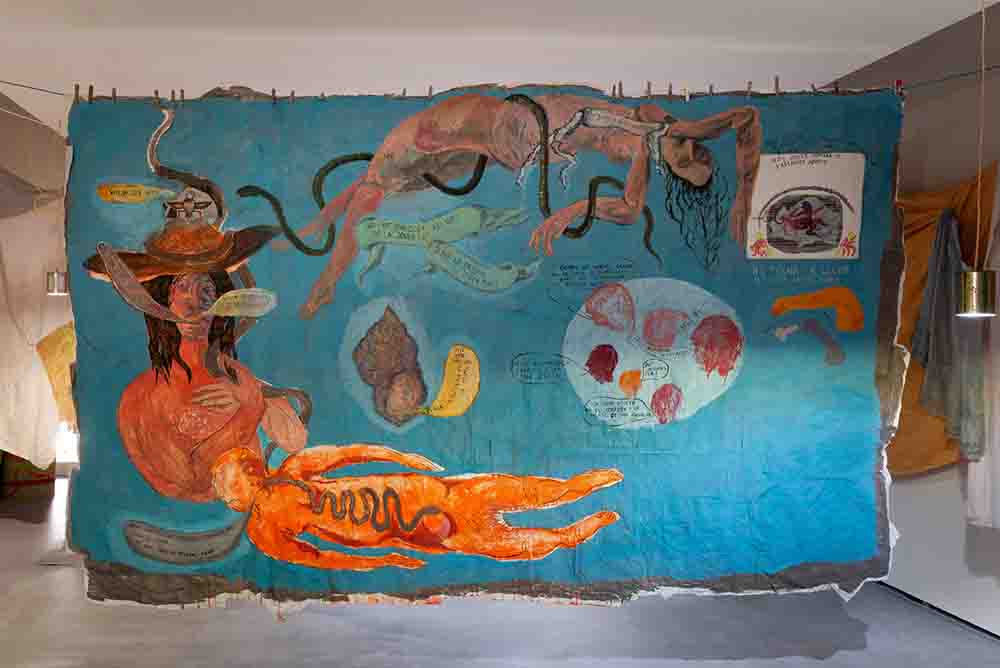
“And as I entered the portal, I felt the water touching me
with its stories from worlds of yore and now.
With my eyes open under the murky sea
I could glimpse masses of seaweed and living and dead bodies.
Spirits and fish.
The sea is the portal.
Universitat Herbal.”
popea
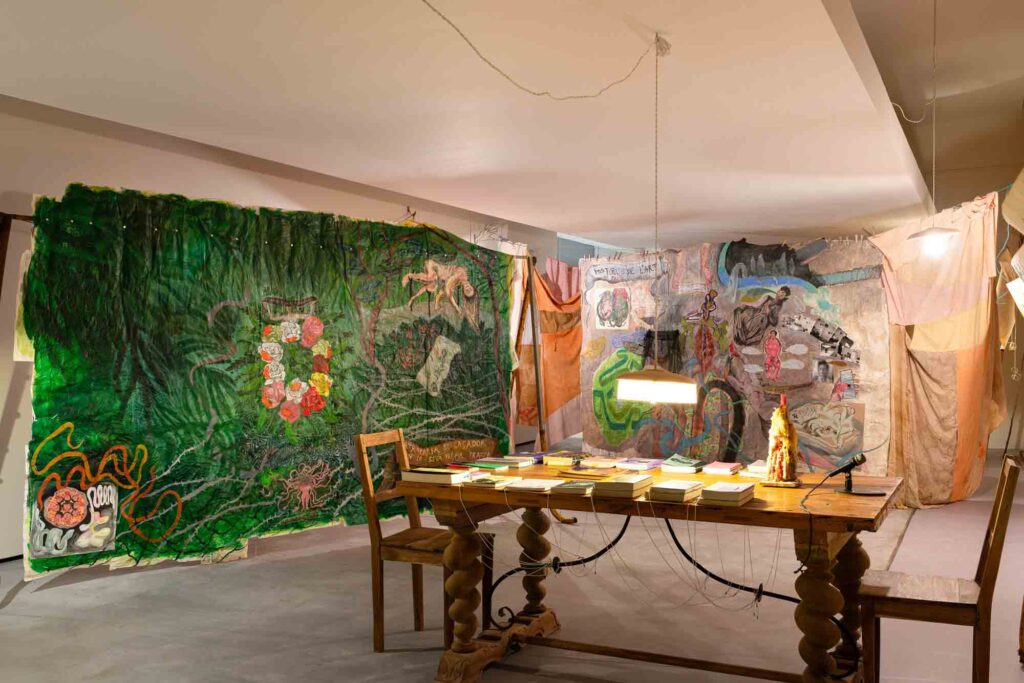
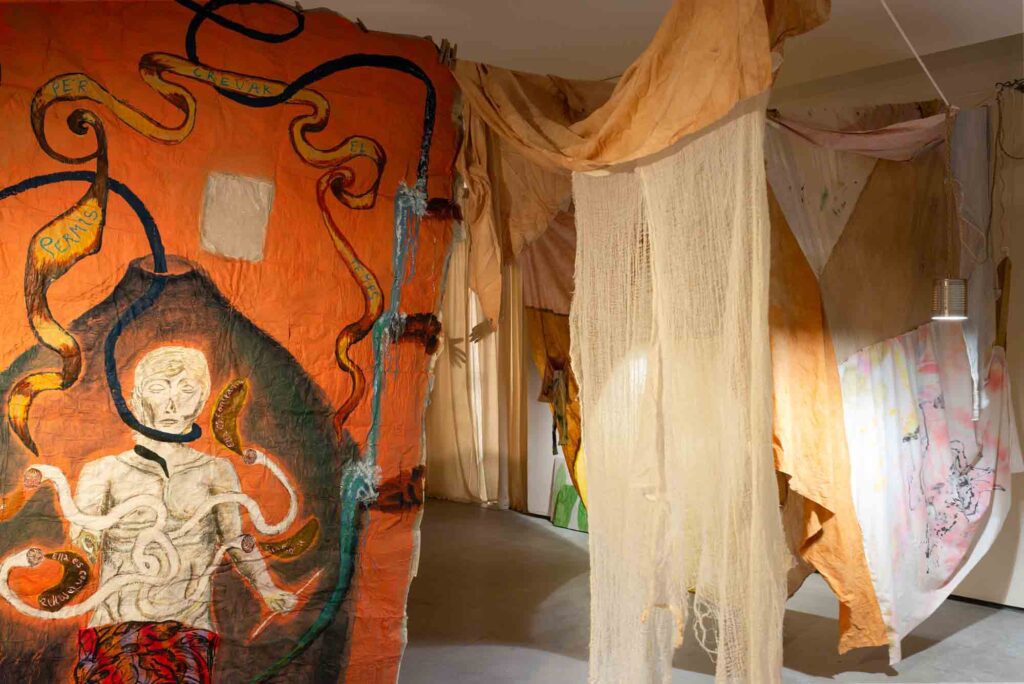
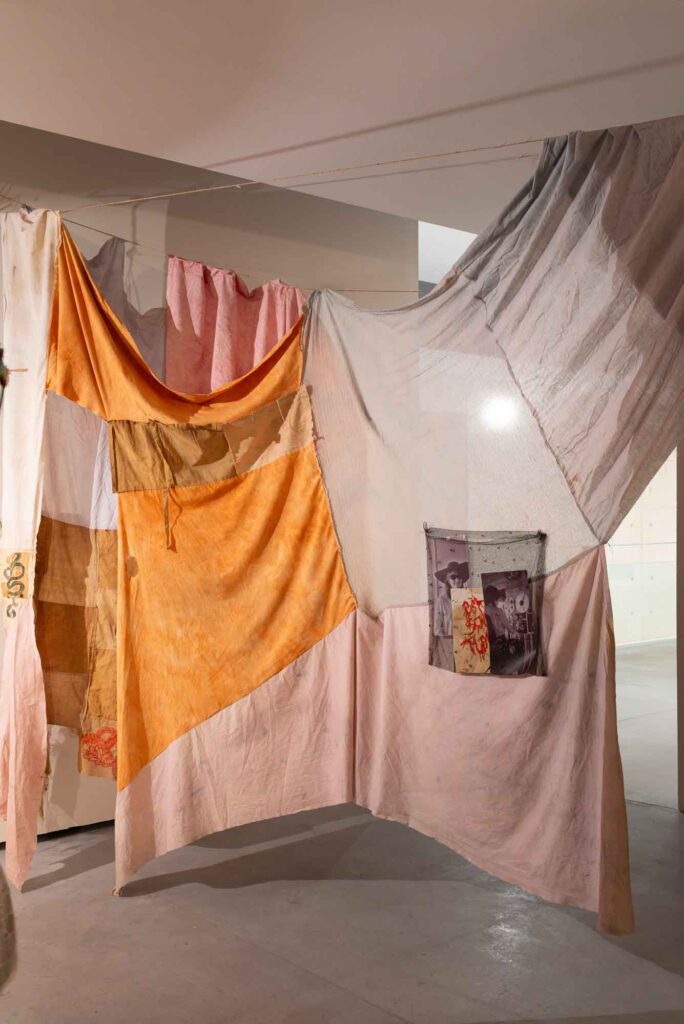
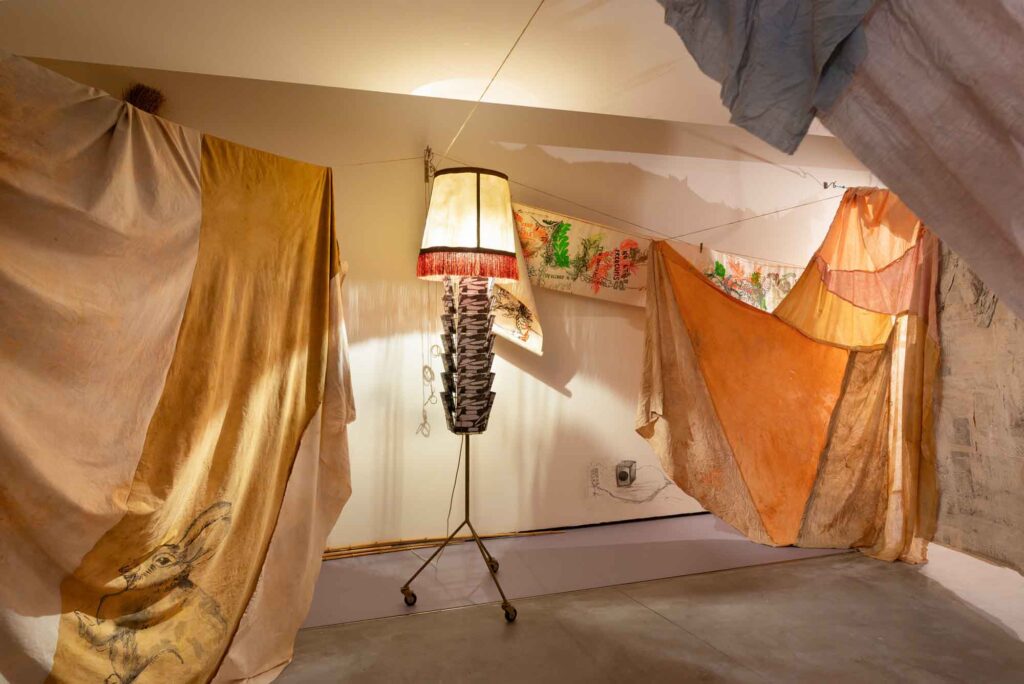
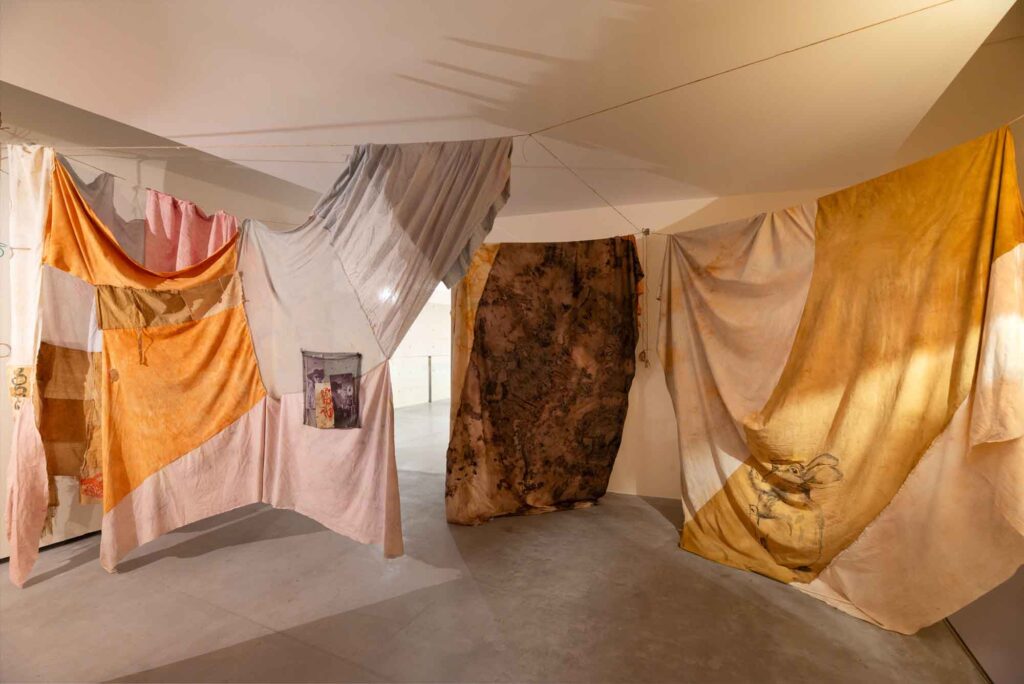
popea builds a porous labyrinth, sensitive to the passage of air and the resonance of voices. The pathway is filled with entrances, exits and nooks and crannies which, in their broken-open state, invite you to wander through a mental landscape woven of memories, fictions and conversations.
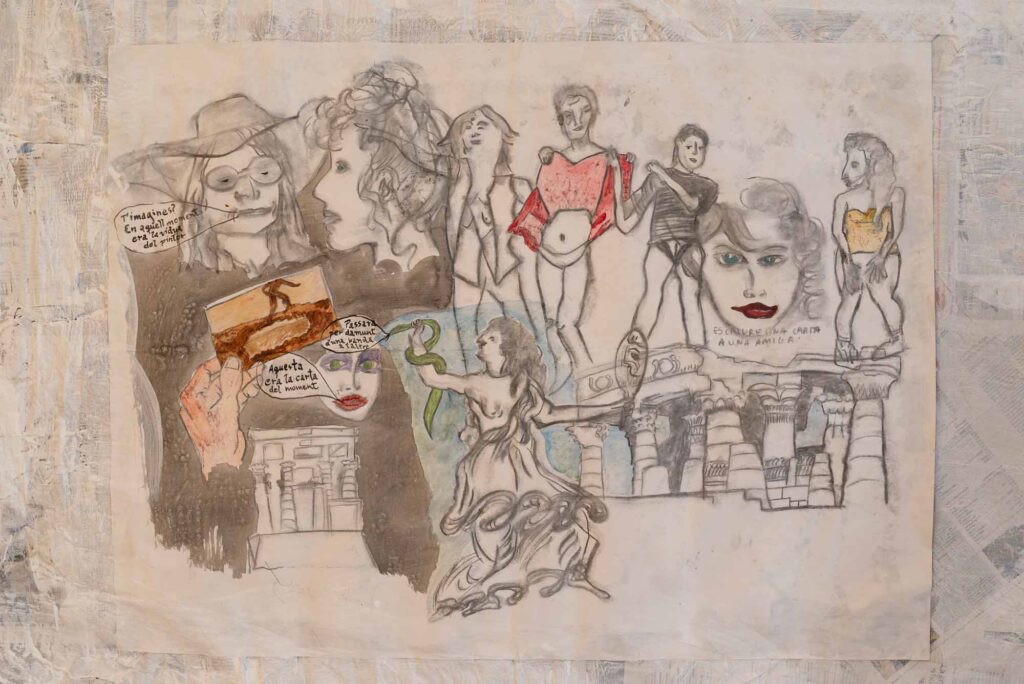
“Universitat Herbal: Paintress Gossip” emerges as a constellation of personal stories about painting. Nothing is built in solitude: the figure of the paintress moves through time and transcends the limits of a single story. From this non-place, she remembers.
The project also raises the question: what if…? The future is rewritten from the present to imagine other possible pasts.
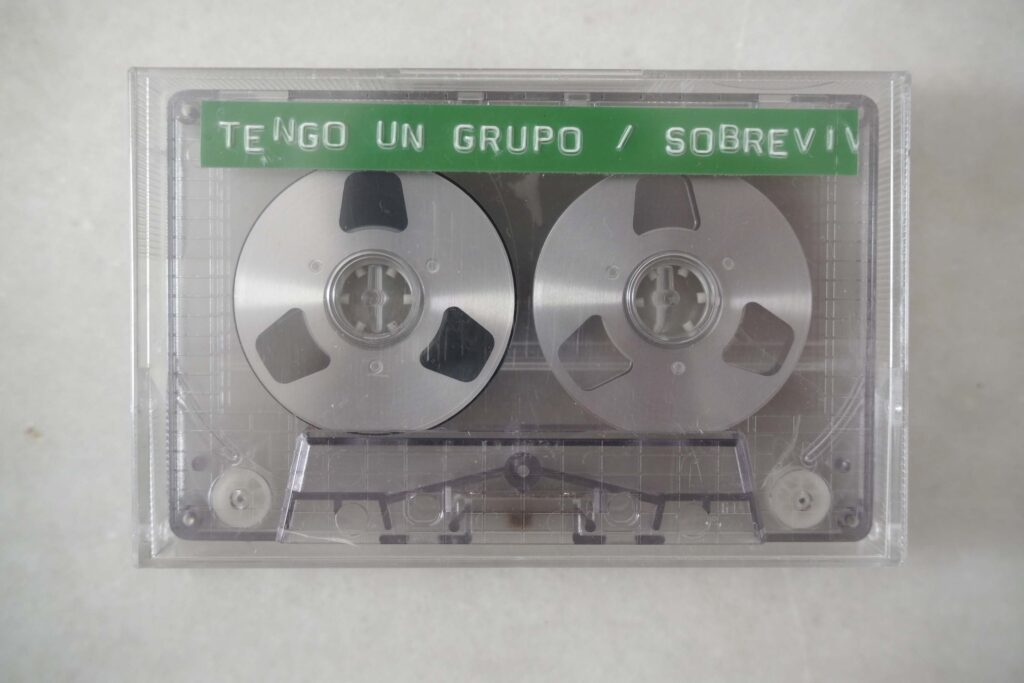
Over the summer of 2025, popea ran the Jeleton Camp together with the group of the same name and Rafael Martínez del Pozo (audiovisual recording), at her little house, Es Pinaret. The intense coexistence shifted individual practice—painting, diaries—towards collective work, driven by conversation. Snippets and evocations of the archaeology of the desire to be an artist budded forth: the fascination and disappointment of studying at a Spanish fine arts faculty in the 1990s. The river of memory carried fragments away and returned them to the murky sea, transformed into a portal. Bathing in the sea suspended self-absorption and transformed the water into a passageway to other worlds. Memories arose like an inevitable landslide, and when verbalised, they became something shared, belonging to many. What is remembered becomes real; what is recounted transforms us.
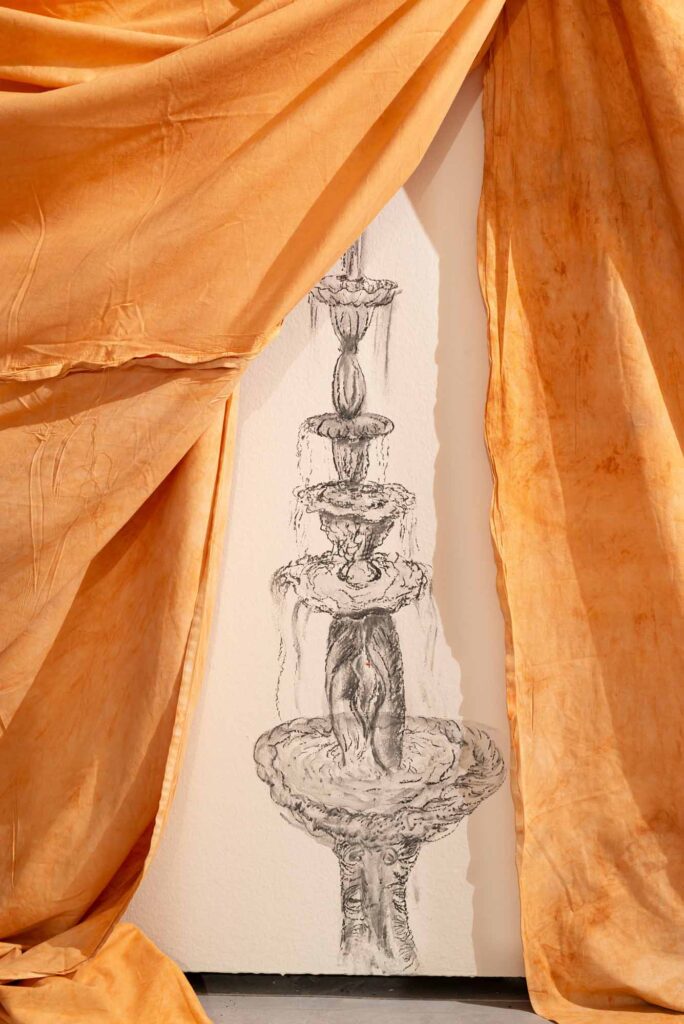
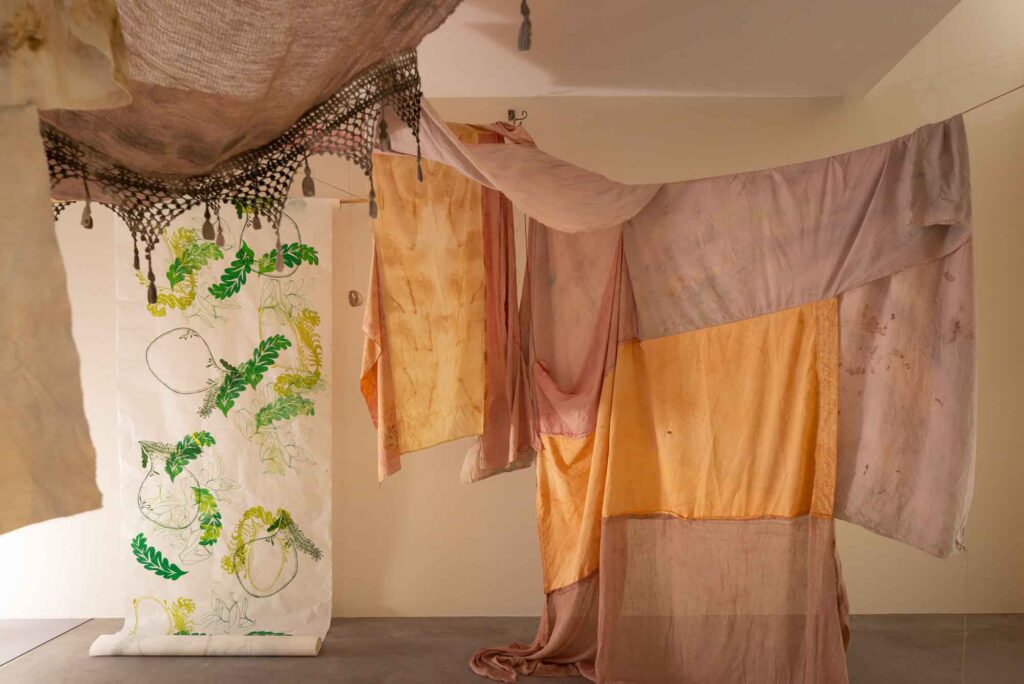
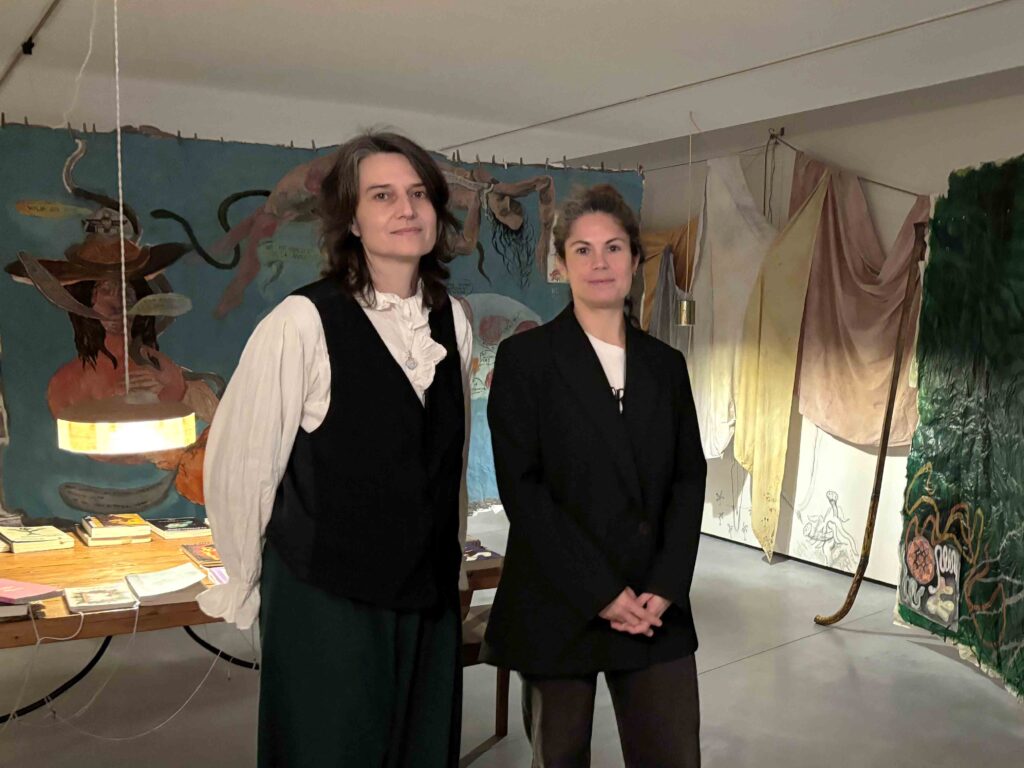
Upon entering the space, we find fabrics dyed with organic and natural elements. Their rusted images evoke memories and thoughts. The sounds never quite match what we see: a text being read interferes with the image; memories interrupt the scene and together they unfold, repeating themselves like a spell. The room becomes a place for coming together and listening. On the table are books that reflect the genealogy of women writers who have accompanied and structured this project.
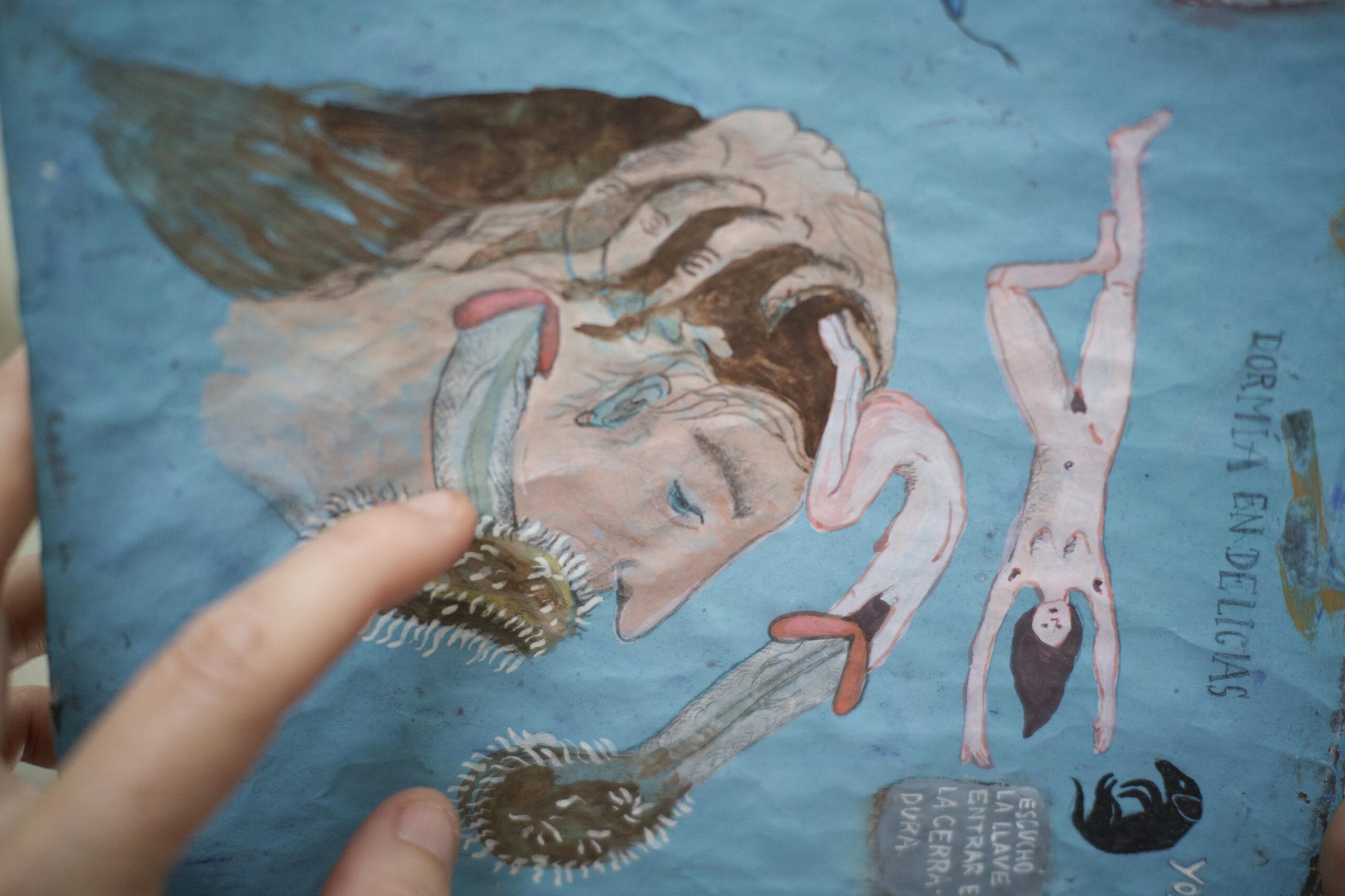
The old building of the Faculty of Fine Arts in Cuenca now appears as a frozen image, devoured by vegetation: an interior forest that we explore attentively, with the tranquillity of knowing that everything is on hold, already dead. Inside the labyrinth, a line repeats: a scribble that runs across the surface of the paper, like brambles that prevent us from seeing what we want to remember, warning us of the danger they conceal. This denunciation creates ruptures in the emotional current that sustained the group’s norms. From this rupture, new possibilities emerge: refocusing attention, reorganising the collective around justice and shared vulnerability, even if this causes discomfort. What stories emerge when the denunciation is made?
At the kitchen table, gossip and confessions become strokes that break and reopen the space. Every gesture and every word function as a small act of resistance, a way of recognising fragility and imagining new ways of living together.
Catalina Obrador Rosselló (Santanyí, Mallorca, 1977) studied at the Faculty of Fine Arts in Cuenca from 1995 to 2000. In the early stages of her career, she mainly focused on drawing and painting, exhibiting her work in galleries such as Buades and Rafael Pérez Hernando, Madrid; Javier Marín, Málaga; and, more recently, Luis Burgos, Madrid. She maintains close links to the artists of Al Quinto Pino Art Club in Mallorca, where she has shown her work on several occasions, and was selected among the hundred artists included in Francesca Gavin’s Despite moments of clarity, there is no “ism” in this book. (2011). She currently lives and works in her hometown.
Her recent projects are centred around books and reading as mechanisms of collective activation, adopting hybrid forms that combine action, drawing, radio, embroidery and community practices. She has organised encounters and collaborations in a variety of spaces—from workshops and old warehouses converted into studios, to monasteries and churches—as well as projects with collectives of artists and activists. She is a member of the Supratrasformes group, with whom she has developed workshops such as Habitar los afectos (Béjar, Salamanca), and has activated group readings, sound performances and collective weaving actions in public spaces. Her latest works are presented as successive activations of an ongoing project, including Sensacional recopilació d’històries mai abans contades per l’autora (2021–2024), carried out in different locations around Mallorca.
Parallel to this, she runs a feminist book club at Llibreria Pròpia in Palma and continues her research on shared language and the creation of collective meeting spaces through projects such as Ràdio popea, which includes interviews, female gatherings and sound performances, expanding her practice into the participatory and social spheres.