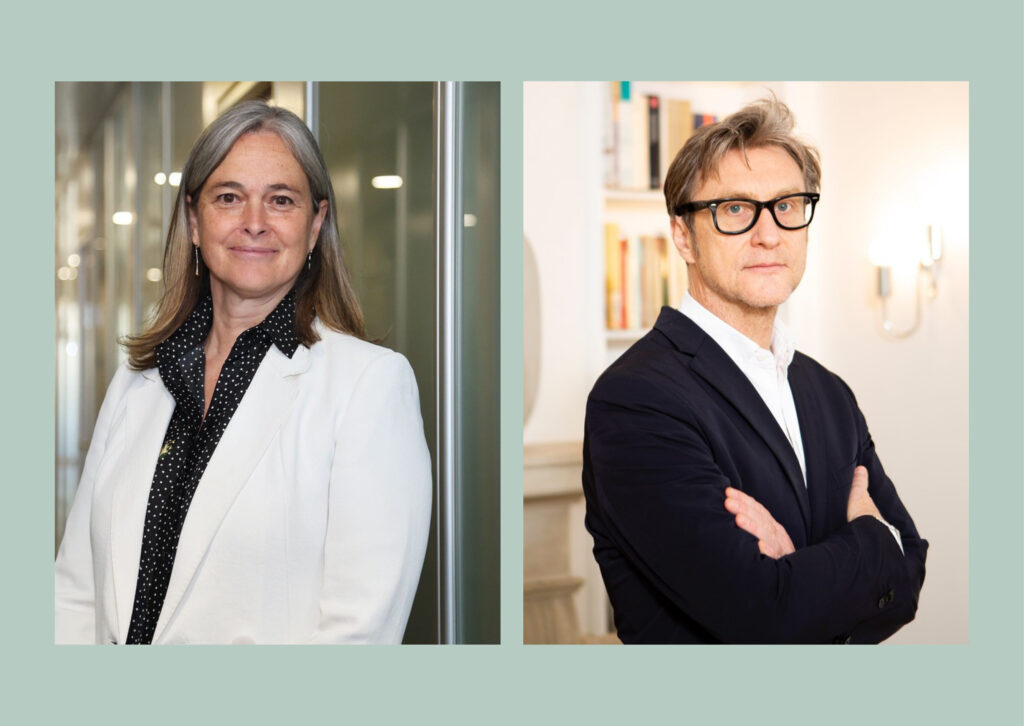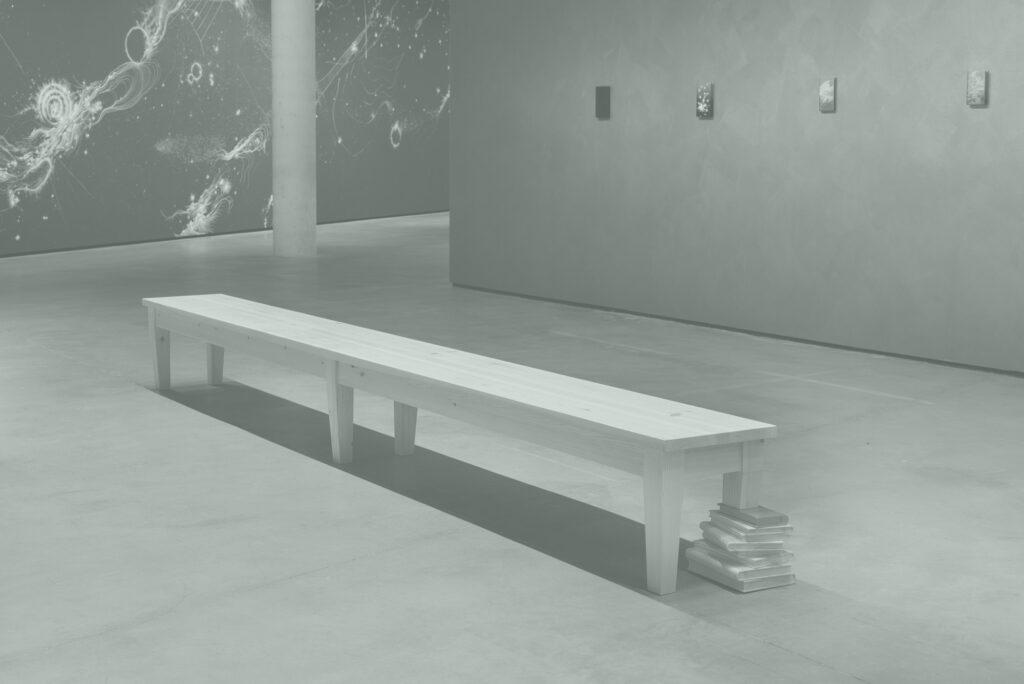
The Master’s Degree in Creative Thinking and Strategic Design of Cultural Projects, developed by the ADEMA School of Higher Artistic Education in collaboration with Es Baluard Museu d’Art Contemporani de Palma, trains professionals capable of conceiving, designing and managing cultural projects with a strategic vision and social impact.
The programme combines creative thinking, artistic research, and strategic design tools to develop innovative and sustainable cultural proposals. Through a hands-on approach, students work within the contemporary cultural ecosystem, integrating art, design, storytelling, and community engagement to generate projects with cultural and social relevance.
Learn by developing real projects in the cultural sector , creating innovative proposals from the idea to their implementation.
Make an impact on society through art , collaborating with organizations and working on real social challenges. Design solutions with tangible impact.
Active and participatory training , where the classroom becomes a space for debate, creativity and strategic thinking.
- Develop a creative and strategic mindset to design innovative cultural projects.
- Learn to create, manage and communicate cultural projects from start to finish.
- Understand the current cultural sector and identify new professional opportunities.
- Master strategic design tools and digital storytelling to connect with audiences.
- Work on real projects with cultural institutions and build your network of contacts.
- Apply creativity to social impact and sustainability with purpose-driven projects.
- It integrates art, culture, and innovation to transform realities from a critical perspective.





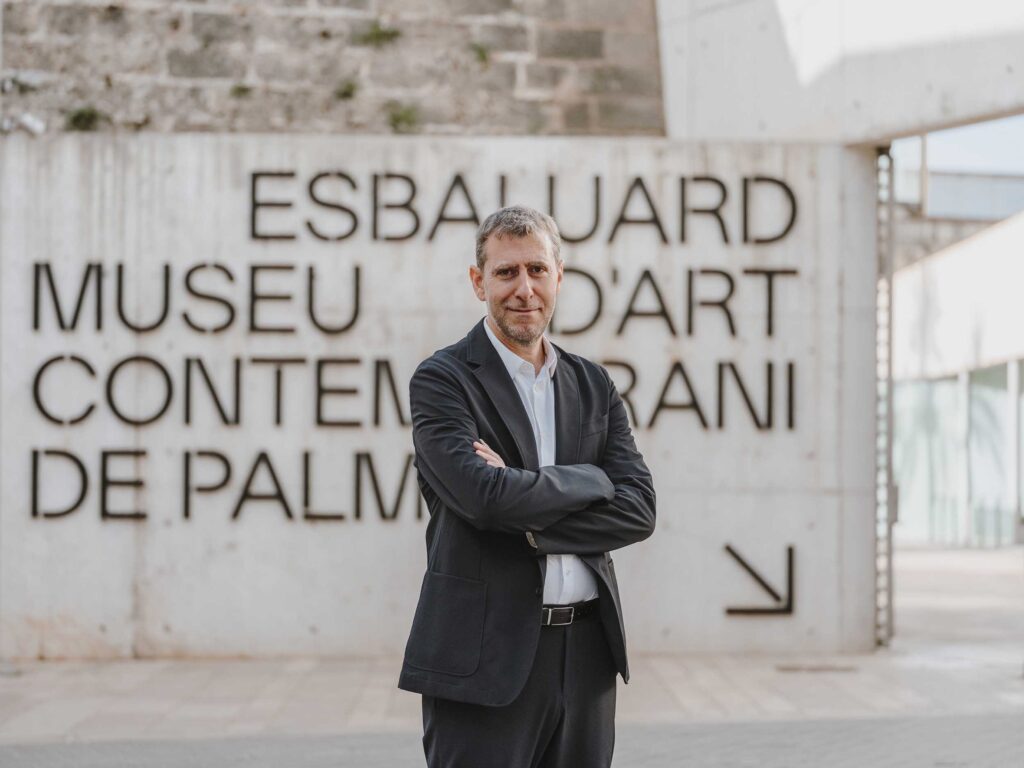








— Graduates and professionals in the artistic and cultural field.
— Creative profiles with a social conscience.
— Professionals from cultural, educational or creative institutions.
— Entrepreneurs and cultural agents.
— Multidisciplinary profiles that want to integrate into the cultural ecosystem from an innovative and strategic perspective.
Module 1: Cultural strategies, narratives and creative ecosystems (18 ECTS)
The Cultural and Creative Sector in the 21st Century: Impact and Purpose.
Design and Management of Cultural Projects.
Narrative Design and Digital Culture.
Module 2: Creative processes and applied research in art and culture (12 ECTS)
Art and Design for Transformation.
Expanded Art and Creative Research.
Module 3: External Academic Internships (12 ECTS)
External academic internships.
Module 4: Master’s Thesis (18 ECTS)
Master’s thesis.
— Management and direction of cultural projects in institutions and organizations.
— Curating and producing exhibitions in museums and art centers.
— Strategic cultural consulting for companies and administrations.
— Design and management of cultural events and festivals.
— Cultural communication and marketing, including digital environments.
— Development of own projects and cultural entrepreneurship.
About the scholarships
This scholarship programme aims to facilitate participation in the Master’s Degree in Creative Thinking and Strategic Design of Cultural Projects (Es Baluard Museu – ADEMA) and, specifically, to enable interested individuals to undertake its first edition, which will run between October and June 2026.
For more information about the master’s programme, access routes and faculty, please visit: https://esbaluard.org/master/
The programme includes 6 scholarships offered by Es Baluard Museu d’Art Contemporani de Palma. At the same time, Fundación ADEMA+ launches its own scholarship programme for ADEMA students.
Applicants interested in undertaking the master’s degree and applying for a scholarship must be eligible for admission through one of the options outlined in the “access and admission” section. (https://esbaluard.org/master/#acceso-y-admision)
The Master’s Degree in Creative Thinking and Strategic Design of Cultural Projects is aimed at individuals interested in acquiring multidisciplinary knowledge capable of connecting art history and fine arts with environmental studies, anthropology, science, economics or innovation, using artistic processes and strategic design as methodological tools.
These scholarships are intended for profiles with a high capacity for innovation, critical thinking and potential for development in the field of contemporary cultural projects.
Up to six scholarships may be awarded for the 2026–27 edition of the master’s programme, distributed across different categories.
The programme consists of 4 scholarship categories with the aim of encouraging participation in the training programme.
Each category includes different conditions.
- Category 1
2 scholarships covering 100% of the tuition fee.
Aimed at individuals with organisational and coordination skills who can support certain aspects of programme management and logistical assistance.
These profiles are not linked to specific academic qualifications.
- Category 2
1 scholarship covering 100% of the tuition fee.
Aimed at individuals with communication skills who can contribute to the programme’s media and strategic development on social networks.
This profile is not linked to specific academic qualifications.
- Category 3
1 scholarship for individuals in vulnerable situations covering 100% of the tuition fee.
This category will take into account the following situations of applicants:
- Victims of abuse.
- Individuals in situations of economic vulnerability.
- Individuals with disabilities.
- Individuals in the process of regularising their residency status.
- Category 4
2 open scholarships covering up to 75% of the master’s tuition fee.
Applicants must complete the application form and submit the required documentation within the established deadlines, as well as pass a personal interview.
Submission of documentation
- Motivation letter, with a maximum of 600 words.
- Official Spanish university degree or equivalent (according to access route to the master’s)
- Academic transcript: average grade of previous studies (according to access route to the master’s)
- Documentation: ID card, NIE or passport.
- Curriculum vitae detailing the applicant’s data, education and professional experience or trajectory, including information on language proficiency.
- In the case of Category 3 scholarships, documentation* proving the applicant’s vulnerable situation.
Deadlines and application procedure
The application deadline is 17 August 2026.
To apply for the scholarship, the form annexed must be completed and the required documentation sent to mastereb@esbaluard.org.
The subject line of the email must read: “Scholarship Application Master Creative Development + scholarship category applied for”.
Selection process and evaluation criterio
The evaluation committee will be composed of at least three members of the Master’s Degree in Creative Thinking and Strategic Design of Cultural Projects programme team.
Selection will be based on the overall assessment of candidates in terms of the suitability of their academic and professional background to the programme, as well as the reasons motivating their interest.
These scholarships prioritise talent and creative capacity over exclusively quantitative criteria.
In the event of a tie between candidates, the possibility of conducting a personal interview will be considered.
* Specific documentation Category 3 scholarships
- Victims of abuse
– Supporting documentation from the Institut Balear de la Dona and/or a police report (a confidentiality agreement will be signed by Es Baluard Museu). - Individuals in situations of economic vulnerability
– In the case of salaried individuals, a personal income tax return must be submitted, showing an income below €20,000. A sworn declaration of non-cohabitation with other individuals must also be provided.
– In the case of family income, it must be below €20,000.
– In the case of individuals without income but living in family units, the income of cohabiting individuals must be submitted and must be, in total, below €20,000.
– In the case of self-employed individuals, a tax return below €20,000 and personal income tax (IRPF) documentation must be submitted.
– In the case of unemployed individuals, a report of uninterrupted registration as unemployed must be submitted. - Individuals with disabilities
– Certificate accrediting the degree of disability issued by the Direcció General de Dependència. - Individuals in the process of regularising residency
– File/application in process of residency regularisation.
In all cases, a sworn declaration of the accuracy of the information provided must be submitted.
Regulations
- The scholarship is granted exclusively for the corresponding academic year.
- The total amount of financial aid may not exceed the total cost of tuition.
- Applying for a scholarship does not guarantee that it will be awarded.
- The scholarship only covers first enrolments.
- Withdrawal from the programme will result in the loss of the scholarship and the repayment of the amount granted.
Contact: mastereb@esbaluard.org
1. Access
- Bachelor’s Degree in Higher Artistic Education.
- University degree or equivalent.
- Have another Master’s degree.
- Professional experience/Other prior training that must be accredited in the admission process.
To obtain the Master’s Degree, it is necessary to present proof of official qualification.
2. Admission
Check that you meet the entry requirements or are in the process of obtaining them for the next course.
- Registration: 12 May to 15 September 2026
3. Registration
1st round of admission: June 12 , confirmation of applications and sending of instructions to formalize enrollment.